
Decorating a Small Apartment on a Budget
Decorating a small apartment on a budget is all about making smart, strategic choices that squeeze every bit of style and function out of your space. It really boils down to a simple philosophy: plan your space first, then purchase with purpose. This approach saves you from impulse buys and ensures every dollar you spend helps create a cohesive, comfortable home you actually love living in.
Your Blueprint for a Budget-Friendly Apartment
Welcome to your game plan for creating a stylish home without draining your bank account. Let's get one thing straight: the idea that a beautiful apartment requires a massive investment is a total myth. In reality, a thoughtful plan is your most valuable asset. This guide will give you a framework to confidently decorate your small space, turning limitations into creative opportunities.
Instead of getting lost in endless scrolling, your first move is to nail down a clear vision and a realistic budget. This isn't about restriction; it's about empowerment. When you know your financial boundaries, you can prioritize what really matters to you.
Setting a Realistic Budget
First, let's define what "budget-friendly" means for you. For most people, it's about creating a foundational setup that balances cost with longevity. For example, you can realistically pull together a complete living and dining room for around $3,000. That number covers the essential furniture and decor to make a space feel both livable and put-together.
This approach is all about investing in versatile, quality anchor pieces upfront, then layering in the smaller, personal touches over time. It’s a marathon, not a sprint.
A well-planned budget is the single best tool for stress-free decorating. It transforms overwhelming choices into a clear, actionable checklist, preventing impulse buys and ensuring every purchase serves a purpose.
The Power of Planning Ahead
Before you even think about adding items to a cart, get laser-focused on your core needs. A successful budget decorating project hinges on a solid plan that addresses both how your home looks and how it functions. This initial blueprint will guide every decision you make later, from the sofa you pick to the paint colors you choose.
Here's where to start building that foundation.
Your Initial Apartment Decor Checklist
This table breaks down the crucial first steps. Taking the time to do this upfront will save you countless headaches (and dollars) down the road.
| Action Step | Why It Matters | Budget Impact |
|---|---|---|
| Assess Your Lifestyle | Determines what you actually need. Do you work from home? Entertain a lot? This dictates your layout and furniture priorities. | High |
| Measure Everything | Prevents costly mistakes, like buying a sofa that won't fit through the door. Measure rooms, windows, and entryways. | High |
| Create a Mood Board | Keeps your style consistent and focused. Use Pinterest or explore collections of modern home decor for inspiration. | Low |
| Prioritize Your Purchases | Separates "must-haves" (a bed, seating) from "nice-to-haves" (art, accents), guiding where your money goes first. | High |
By establishing this foundation, you create a clear path forward. You’ll know exactly what you’re looking for, making it so much easier to spot a great deal and make smart investments that you’ll enjoy for years to come.
Mastering Your Apartment Layout and Flow
Before you even think about adding that gorgeous sofa to your online cart, let's talk about the single most important step: understanding your canvas. A solid layout plan is what stops you from making expensive mistakes, like buying a couch that eats the entire room or a desk that creates an awkward bottleneck. This is your chance to think like a designer and squeeze function and style out of every last square inch.
The whole point is to create a space that feels intuitive and open, not like a cluttered shoebox. It all starts with a tape measure and an honest look at what you’re working with. Seriously, put the shopping on hold and focus on the bones of your apartment first.
Measure and Map Your Space
First things first, grab a tape measure and get the dimensions of your room—length, width, and even the ceiling height. Jot down where every window, door, and built-in feature is. And for the love of all things practical, find every single power outlet. Knowing where they are now saves you from a tangled mess of extension cords later.
Next, identify the room's quirks. Got an awkward corner that feels useless? A radiator in a weird spot? A living room that feels more like a bowling alley? These aren't problems; they're design challenges. Solving them is what makes your layout feel custom and smart.
This simple process—budget, plan, shop—is the foundation for a space you'll actually love.
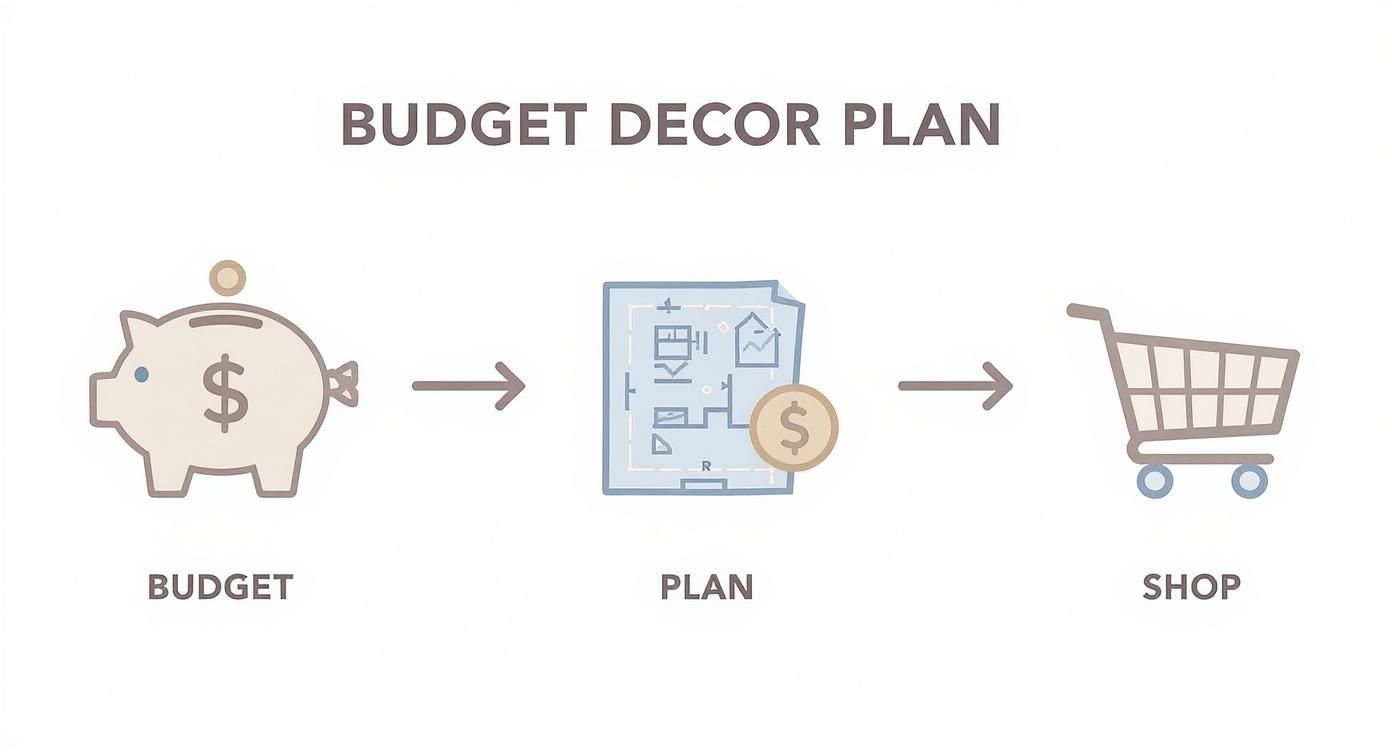
This visual is a great reminder that all the fun shopping comes after you’ve done the groundwork with your budget and floor plan.
Create Functional Zones
Even in the tiniest studio, you can carve out distinct "zones" for different activities. This mental separation makes a small space feel way more organized and a lot bigger than it actually is. Sketch out a simple floor plan to map where everything will happen.
- Living Zone: This is your chill-out and entertaining spot, usually built around a sofa and coffee table.
- Work Zone: If you work from home, claim a corner for a desk—even a small floating one makes a huge difference.
- Sleeping Zone: In a studio, you can define this with a bookshelf, a curtain, or even just a large area rug under the bed.
- Dining Zone: A small bistro table for two is all you need to create a dedicated place for meals, keeping food away from your laptop and lounge space.
You can do this on graph paper (a good rule of thumb is one square = one foot) or play around with free online layout tools. The goal is just to see how you’ll actually move through the space.
Establish Clear Traffic Flow
Traffic flow is just a fancy term for the invisible paths you walk through a room. A good layout keeps these pathways clear. A classic small-space mistake is placing furniture in a way that forces you to squeeze or shuffle around it every time you cross the room.
Aim for at least 30-36 inches for main walkways, like the path from the door to the couch. For the space between a coffee table and a sofa, 18 inches is the sweet spot—close enough to set down a drink, but with enough room to get by.
This keeps your apartment from feeling like an obstacle course. Think about your daily habits. Where do you walk first thing in the morning? Make that path direct and easy.
Solving Common Layout Challenges
Small apartments are notorious for tricky layouts. Instead of fighting them, lean into clever solutions that embrace the space you actually have.
The Long, Narrow Room:
To keep a "bowling alley" living room from feeling like a hallway, break it up into multiple zones. Use a rug to define a seating area at one end. A console table or a low bookshelf behind the sofa can create a visual stop, separating the living zone from a small dining nook or workspace on the other side.
The Open-Concept Studio:
Defining your zones is everything here. Use your furniture to create subtle divisions.
- A tall, open-backed bookshelf can separate your sleeping and living areas without blocking precious light.
- Placing a sofa with its back to your "bedroom" is a simple, clear way to mark where the living zone begins.
- Area rugs are your absolute best friend. Using a different one in each zone is one of the easiest ways to create visual separation.
By getting your layout right from the start, you're creating a blueprint for success. This plan becomes your guide for every single purchase, ensuring that whatever you bring home has a purpose and a place. It's the smartest way to make your budget work harder for you.
Choosing Smart Furniture for Small Spaces
Let's be honest: furniture is usually the biggest expense when you're setting up a new place. And when that place is a small apartment, every single piece has to pull its weight. This isn't just about buying smaller things—it’s about choosing smarter things. Every chair, table, and sofa needs to have a purpose, and ideally, more than one.
This is where multifunctional furniture becomes your best friend. Start thinking beyond the obvious. That ottoman isn't just a footrest; it's also extra seating when friends come over and a hidden spot to stash blankets. A dining table can easily double as your workspace, especially if it’s an extendable model that can shrink or grow with your needs.
Go for Multifunctionality
Here’s the golden rule for furnishing a small space on a budget: invest in pieces that solve multiple problems at once. This simple approach saves you both money and precious square footage. Instead of buying a coffee table and a separate storage trunk, you find one brilliant piece that does both jobs.
This isn't just a budget hack; it's a cornerstone of modern design. The global interior design market, which hit $136.12 billion in 2023, is laser-focused on minimalist, multifunctional solutions for today’s compact homes. As the market expands, adaptable furniture is becoming the new standard. You can dig into more of these evolving interior design statistics to see the trend for yourself.
Here are a few multifunctional champs to keep an eye out for:
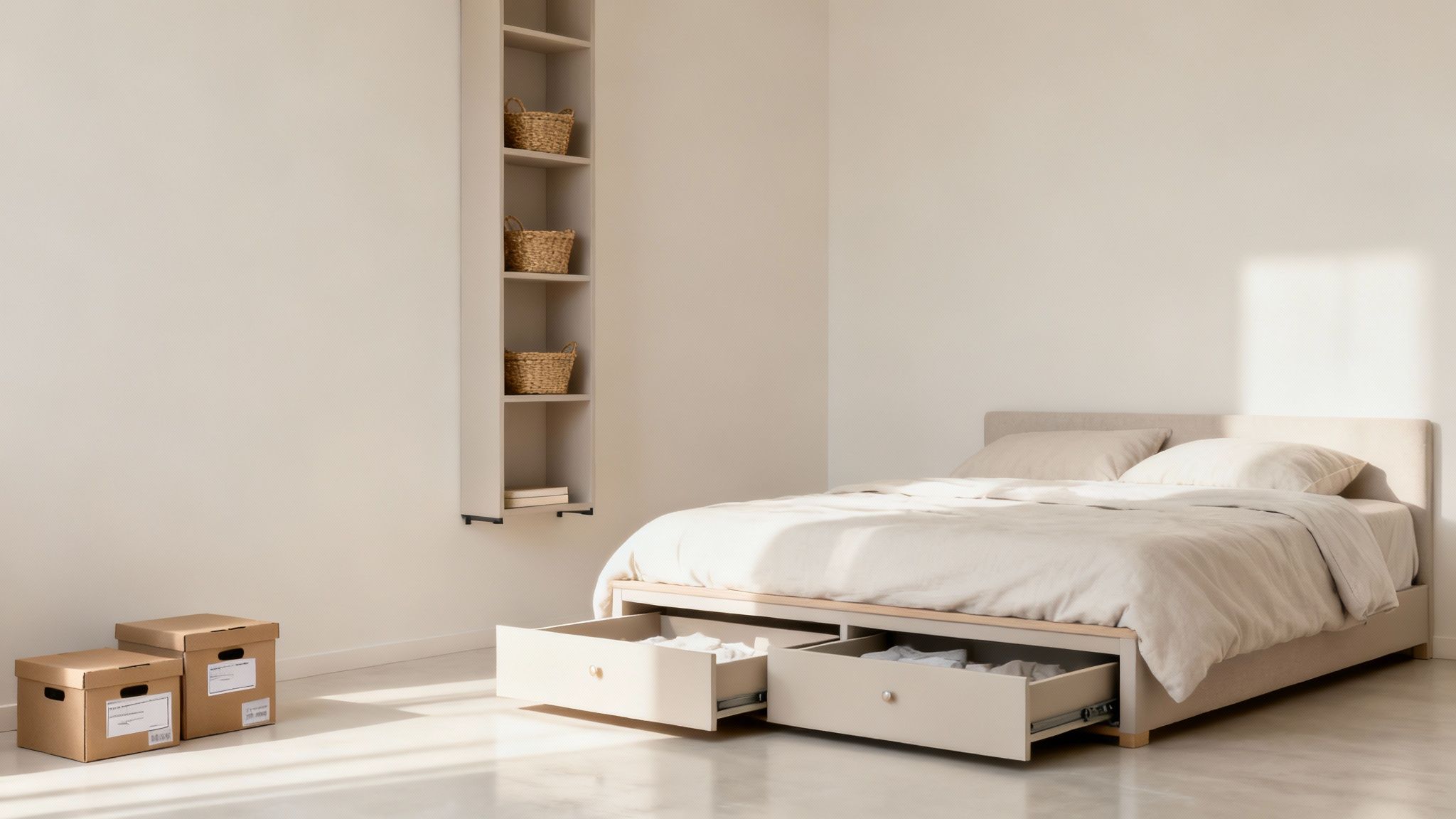
- Storage Beds: A lift-up frame or built-in drawers can create a massive amount of hidden storage for off-season clothes, extra bedding, or shoes.
- Nesting Tables: These are the ultimate space-savers. Stack them to clear floor space, then pull them out when you have guests and need more surfaces.
- Convertible Sofas: A good-quality sofa bed is a game-changer if you ever plan to have overnight guests. Today's designs are worlds away from the clunky, uncomfortable futons of the past.
- Wall-Mounted Desks: These fold-down desks give you a dedicated workspace without permanently eating up your floor.
My favorite investment for a small living room? A coffee table with hidden storage. It makes the entire room feel cleaner and bigger just by keeping remotes, magazines, and coasters out of sight.
Understand Visual Weight
Beyond what a piece of furniture does, you have to consider its visual weight—how heavy it looks. Two sofas can have the exact same dimensions, but one can make a room feel claustrophobic while the other keeps it feeling airy and open.
The secret is all in the legs. Look for furniture that's lifted off the ground, like a mid-century modern sofa or a console table on slender legs. This simple trick creates an illusion of more space because your eye can travel underneath the piece, making the room feel larger.
Picture a bulky, skirted armchair that sits like a solid block on the floor. Now, imagine a chair of the same size but with elegant, tapered legs. The light and air flowing underneath instantly make it feel less imposing. It's a small detail that makes a huge difference.
Know Where to Splurge and Where to Save
A tight budget doesn't mean you have to settle for the cheapest version of everything. The real skill is learning how to spend your money strategically. Some items are worth the investment for the daily comfort they provide, while others are perfect opportunities to save a little cash.
Where to Splurge:
- Your Sofa: You'll probably use it every single day. Get the most comfortable, well-made sofa you can afford. It's the anchor of your entire living room.
- Your Mattress: Don't skimp on sleep. A great mattress is a direct investment in your health and well-being.
- A Smart Storage Piece: A high-quality item like a smart coffee table with hidden compartments can solve major clutter issues and become the hardworking centerpiece of your living area.
Where to Save:
- Side Tables & Accent Chairs: These are fantastic finds at thrift stores, flea markets, and online marketplaces. You can often snag unique, high-quality pieces for a steal.
- Bookshelves: Basic, affordable shelving units are a blank canvas. A little paint or some peel-and-stick wallpaper can make them look way more expensive than they are.
- Decorative Accents: Thrifting is your best friend here. Vases, trays, and other small decor items add personality without the hefty price tag.
By being selective, you can put together a collection of furniture that’s not just functional and beautiful, but also a seriously smart use of your money.
Decor Hacks That Create the Illusion of Space
Once your layout is locked in and you've chosen your key furniture, we get to the fun part—the clever tricks that make a small apartment feel surprisingly open and bright. Decorating a small apartment on a budget isn't about expensive renovations; it’s about mastering the art of illusion.
These are the visual hacks that trick the eye, create a sense of depth, and maximize the light you have, all without knocking down a single wall. You don't need a huge budget to make a huge impact. Simple, strategic choices can completely transform a cramped space into a welcoming retreat.
Harness the Power of Color and Light
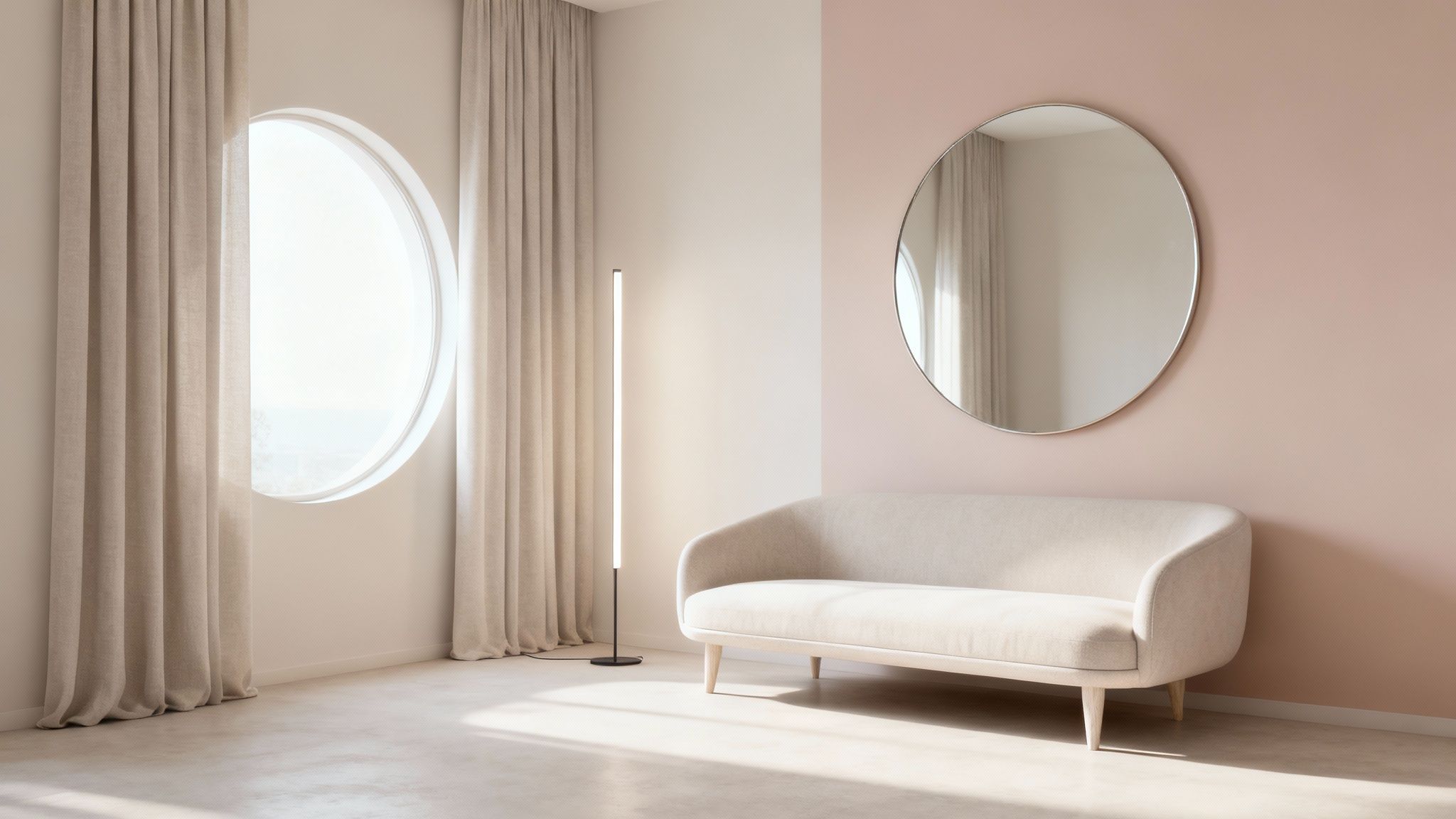
The quickest and most affordable way to open up a room is with paint. Light, neutral colors are your best friends here. Shades of white, soft gray, and pale beige work wonders because they reflect light, making walls feel like they’re receding. It’s an easy way to get that airy, expansive feeling that dark colors just can't replicate.
But that doesn't mean your apartment has to be a sea of boring beige. You can still add personality with a strategically placed accent wall. Painting the wall furthest from the entrance a slightly deeper shade creates an illusion of depth, drawing the eye through the space and making the room feel longer.
The Magic of Mirrors
Mirrors are arguably the single most effective tool for making a small space feel larger. They work their magic in two ways: by reflecting light and by creating the illusion of more space. A large mirror can almost function as a second window, bouncing light around the room and making it feel significantly brighter.
Where you place them is key.
- Opposite a Window: Hanging a large mirror directly across from a window is the classic trick for doubling your natural light.
- In an Entryway: A full-length mirror in a narrow hallway instantly makes the area feel wider and less confined.
- Behind a Lamp: Placing a mirror on a console table behind a lamp will amplify its glow, adding warmth in the evenings.
A common mistake is using a mirror that’s too small. For this trick to really work, go big. A large, simple-framed mirror makes a much stronger statement and does a better job of opening up the space than a collection of smaller ones.
Layer Your Lighting for Ambiance and Height
A single, harsh overhead light can make a small room feel like a sterile box. The secret to good lighting is layering it at different heights to create warmth and draw the eye around the room. I always aim for at least three sources of light in each main area.
This layered approach includes:
- Ambient Lighting: Your general, overall light, like a central ceiling fixture.
- Task Lighting: Focused light for specific activities, like a reading lamp next to a chair.
- Accent Lighting: This adds dimension, like a picture light over artwork or an uplight behind a plant.
Vertical floor lamps are particularly great for small apartments. They take up minimal floor space while drawing the eye upward, which creates a sense of height and makes your ceilings feel taller than they actually are.
Renter-Friendly Solutions for Maximum Impact
Renters often feel stuck, but today’s market is filled with brilliant, non-permanent solutions that let you inject personality without losing your security deposit. It makes sense—a 2023 report noted a 13% increase in people downsizing, which fueled a 40% rise in demand for renter-friendly peel-and-stick wallpaper. You can discover more insights into how downsizing is shaping decor trends on FurnitureToday.com.
Instead of painting an accent wall, try using removable wallpaper to create a bold focal point behind your sofa or bed. Another powerful technique is using large-scale art. One oversized piece makes a much bigger impact and looks less cluttered than a gallery wall of smaller frames.
Finally, don't underestimate your windows. A common mistake is hanging curtains right at the window frame. Instead, mount the curtain rod as high and wide as possible—several inches above and outside the frame. This simple adjustment makes the window appear much larger and the ceiling much higher, adding a sense of grandeur to even the smallest room.
Clever Storage and Decluttering Strategies
Nothing shrinks a small apartment faster than clutter. Even the most thoughtfully decorated room gets swallowed up by mail piles, overflowing closets, and the general chaos of daily life. The real secret to decorating a small apartment on a budget isn't just about what you buy—it's about creating smart systems to keep your stuff organized and out of sight.
The idea is to build an organizational foundation that's actually easy to stick with. When every item has a home, cleanup becomes second nature. Your space feels tidy and open, letting all your hard decorating work finally shine.
Think Vertically and Find Hidden Spaces
When your floor space is precious, the only way to go is up. Vertical storage is a game-changer; it draws the eye upward, making ceilings feel higher while giving you tons of storage without eating into your valuable square footage.
- Tall, Skinny Bookshelves: A narrow tower bookshelf can hold an incredible amount—books, decorative bins, you name it—while only taking up a tiny footprint.
- Wall-Mounted Shelving: Floating shelves are your best friend. Seriously. Use them in the kitchen for spices, in the living room for plants and frames, or above your desk to keep surfaces clear.
Beyond going vertical, start training your eye to spot the hidden storage goldmines in your apartment. These are the nooks and crannies you’ve probably been ignoring, but they can become organizational powerhouses. For a deeper dive on making these spots both functional and beautiful, check out these stylish storage ideas for modern home organization.
Here's where to look for those overlooked spots:
- Under the Bed: Low-profile bins with wheels are perfect for stashing off-season clothes, extra bedding, or shoes.
- Over the Door: Don't forget the back of your doors. An organizer can hold shoes in a closet, cleaning supplies in a pantry, or toiletries in the bathroom.
- Inside Cabinet Doors: Small adhesive hooks or slim organizers are brilliant for hanging measuring spoons, cleaning brushes, or hair tools inside your kitchen and bathroom cabinets.
To help you decide what works where, think about whether you need to go up or tuck things away.
Vertical vs Hidden Storage Solutions
| Storage Type | Best For | Pros | Cons |
|---|---|---|---|
| Vertical Storage | Displaying books, decor; kitchen essentials; bathroom toiletries | Draws the eye up, making rooms feel taller; maximizes small footprints | Can look cluttered if not styled well; requires wall mounting |
| Hidden Storage | Off-season clothing, extra linens, bulky items, things you don't use daily | Keeps visual clutter to a minimum; uses otherwise wasted space | "Out of sight, out of mind" can lead to forgotten items |
Ultimately, a mix of both is your best bet for a well-organized small space.
A Practical Decluttering Method for Apartment Living
Before you can organize, you have to edit. It’s just impossible to create a tidy home when you have too much stuff for the space you’re in. A simple, ruthless decluttering session is your first real step toward a more serene apartment.
Start small and manageable. Pick one drawer or one shelf. Pull every single thing out and sort it all into three piles. This method stops you from just shuffling clutter from one spot to another.
The Three-Box Method
Get three boxes and label them: Keep, Donate/Sell, and Trash. Be decisive here. If you haven't used an item in a year or don’t genuinely love it, it's time to let it go.
As soon as you’ve sorted an area, put the "Keep" items back in an organized way. Then, immediately take out the trash and put the donation box in your car. Don't let it linger! Repeat this process for every drawer, closet, and surface until you’re left with only the things you truly need and love.
Affordable Tools to Maintain Organization
Staying organized doesn't mean you need to drop a ton of cash on fancy systems. Some of the most effective tools are surprisingly cheap and easy to find at places like Target or even the dollar store. Just choose things that fit your space and your style.
These budget-friendly workhorses are a great place to start:
- Decorative Baskets: Woven baskets are perfect for hiding clutter in plain sight. Use one on a bookshelf for electronics, another by the couch for blankets, or a few in a closet for scarves and belts.
- Drawer Dividers: These are completely non-negotiable for kitchen utensil drawers, messy desks, and dressers. They create little compartments that stop everything from becoming a jumbled mess.
- Clear Containers: For pantries, under-sink cabinets, and closets, clear containers are a must. You can see exactly what you have at a glance, which stops you from buying your third jar of paprika.
By combining vertical thinking, a good declutter, and some smart, affordable organizing tools, you can create a system that keeps your small apartment looking spacious and stylish long after the decorating is done.
Your Top Apartment Decorating Questions, Answered
Jumping into decorating your first (or fifth) small apartment on a budget always brings up a few tricky questions. It’s totally normal to feel a little stuck on the details, but getting these common hurdles sorted out now will save you a ton of stress later. Think of this as your quick guide to those little “what if?” moments.
How Do I Deal with Landlord Restrictions?
This is probably the number one worry for renters. Most leases have strict rules about painting, drilling holes, or making any changes that feel permanent. The secret? Lean into temporary solutions that deliver a big visual punch without risking your security deposit.
Instead of paint, think about renter-friendly peel-and-stick wallpaper. It can create a stunning accent wall behind your sofa or bed and comes right off when it’s time to move. For hanging art and mirrors, products like Command hooks and strips are your best friend—they can hold a surprising amount of weight and leave your walls damage-free.
Always give your lease a quick read-through before you start. When in doubt, a quick, friendly email to your landlord for clarification is a smart move that can prevent any costly mix-ups.
What’s the Right Size Rug for My Living Room?
Picking the right rug size is one of the most important decisions you'll make, especially in a small apartment. A rug that's too small is a classic mistake that makes a room feel choppy and even more cramped.
Here's the golden rule: at least the front two legs of your main furniture (like your sofa and any armchairs) should sit comfortably on the rug. This simple trick anchors your entire seating area, making it feel cohesive and intentional. In a perfect world, all the furniture legs would be on the rug, but for small spaces, the "front-legs-on" approach is all you need.
Can I Mix Different Wood Tones?
Yes, absolutely! In fact, you should. A room where every single wood piece matches perfectly can feel a little flat and sterile, almost like a page from a furniture catalog. Mixing wood tones is what gives a space character and a curated, collected-over-time vibe.
To pull it off without it looking chaotic, just follow a few simple guidelines:
- Pick a Dominant Tone: Let one wood finish be the main character. If your dining table is a warm walnut, let that be your primary tone and build from there.
- Look at the Undertones: Notice if the woods have warm (red, yellow) or cool (gray, ashy) undertones. Try to stick within the same family for a more cohesive look.
- Spread the Love: Make sure you distribute the different wood finishes around the room to create a sense of balance. Don’t clump all the dark pieces in one corner and the light ones in another.
How Much Should I Actually Budget for Decor?
This is the big question, and the answer varies for everyone. A realistic starting point for furnishing a basic living and dining space is around $3,000. This can cover the essentials: a sofa, a coffee table, a small dining set, and a rug.
The most important thing is to prioritize. Spend the biggest chunk of your budget on the pieces you use every single day, like a comfortable sofa or a quality mattress. You can fill in the rest—accent pieces, art, and smaller decor—over time from more affordable spots like flea markets, thrift stores, or online marketplaces. Remember, decorating is a marathon, not a sprint.
At AbodeArc, we believe creating a stylish, modern home shouldn't break the bank. Explore our curated collections of affordable decor, smart storage solutions, and unique accents designed to help you build a space you love. Discover budget-friendly modern home decor at AbodeArc and start your transformation today.
Article created using Outrank