
Decorating Small Spaces on a Budget Made Simple
Diving into a Decorating Small Spaces without a plan is a recipe for clutter and overspending. The real secret to success lies in a simple blueprint: measure your space, define its purpose, and set a realistic budget. This prep work is what ensures every dollar and every inch works for you.
Your Blueprint for Decorating Small Spaces
Before you fall in love with a single throw pillow, take a moment to map out the entire project. This isn't about stifling your creativity—it's about focusing it. A solid plan is the best tool you have for turning a cramped room into a place you love, all without draining your bank account.
And it's a common challenge. The global market for small space furniture hit USD 23.4 billion in 2023 and is expected to climb to USD 41.2 billion by 2032. That huge number just shows how many of us are looking for clever, affordable solutions. You can dig into more of those market insights on Dataintelo.
Define Your Needs and Priorities
First things first: what does this room need to do? Is your tiny studio also your home office? Does the living room have to double as a guest room on weekends?
- List the non-negotiables. Jot down the essential activities, like sleeping, working, or eating.
- Identify the pain points. What’s driving you crazy right now? Is it the complete lack of storage or the terrible lighting?
- Prioritize your spending. If you work from home, a comfortable, ergonomic chair is a smarter buy than a purely decorative side table. A great mattress will always be a better investment than pricey throw pillows.
Getting clear on this from the start helps you put your money where it will make the biggest difference in your day-to-day life.
A classic mistake is grabbing all the small, cheap decor items first. Instead, put your initial budget toward the foundational pieces that define the room's function, like a comfortable sofa or a multi-use dining table.
Set a Realistic Budget for Decorating Small Spaces
Once you know what’s most important, you can build a budget that actually makes sense. Think of it as your financial roadmap—it'll keep you on track and stop those impulse buys from derailing your entire project.
Here's a sample budget breakdown to give you a clearer picture of where to focus your spending.
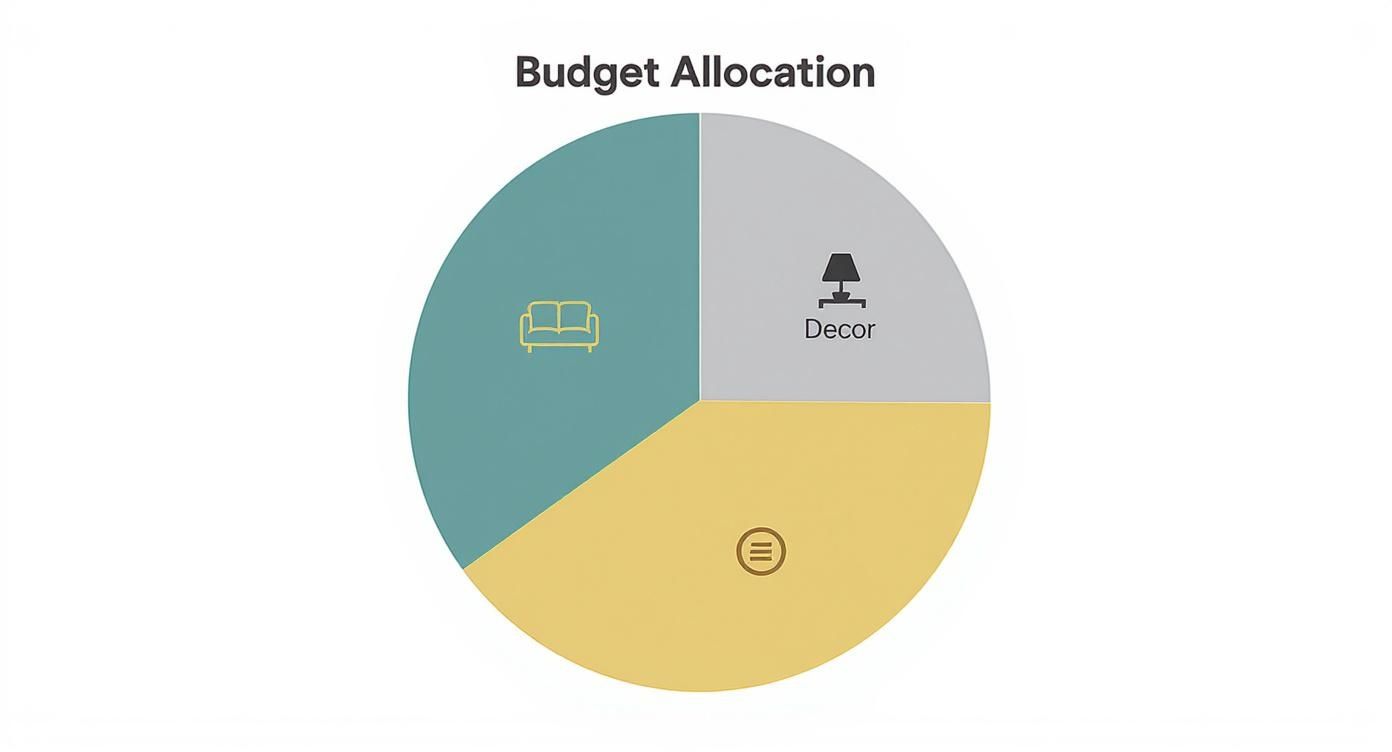
As the chart shows, the biggest slice of the pie should go to the core furniture and storage pieces. These are the workhorses of a small space, delivering the most function and impact.
To make it even more concrete, here's a framework you can adapt for your own project.
Initial Budget Allocation Framework
| Item Category | Suggested Budget % | Key Considerations |
|---|---|---|
| Anchor Furniture | 40-50% | Sofa, bed, desk, or dining table. These are long-term investments that define the space. |
| Storage Solutions | 20-25% | Shelving, multi-functional ottomans, under-bed containers. Focus on vertical and hidden storage. |
| Lighting & Mirrors | 10-15% | Floor lamps, task lighting, and large mirrors to create an illusion of space. |
| Decor & Textiles | 10-15% | Rugs, curtains, pillows, and art. These items add personality and can be updated easily. |
| Contingency Fund | 5-10% | For unexpected costs like shipping, taxes, or that perfect find you didn't plan for. |
This isn't a rigid rulebook, but it’s a solid starting point to ensure your money is working as hard as possible to create a space that's both stylish and incredibly practical.
Choosing Furniture That Works Double Duty
In a small space, every single piece of furniture has to earn its keep. This isn't just about filling a room; it’s about strategic problem-solving. Choosing furniture that pulls double duty is the cornerstone of decorating small spaces on a budget, turning a cramped area into a home that's both versatile and functional.
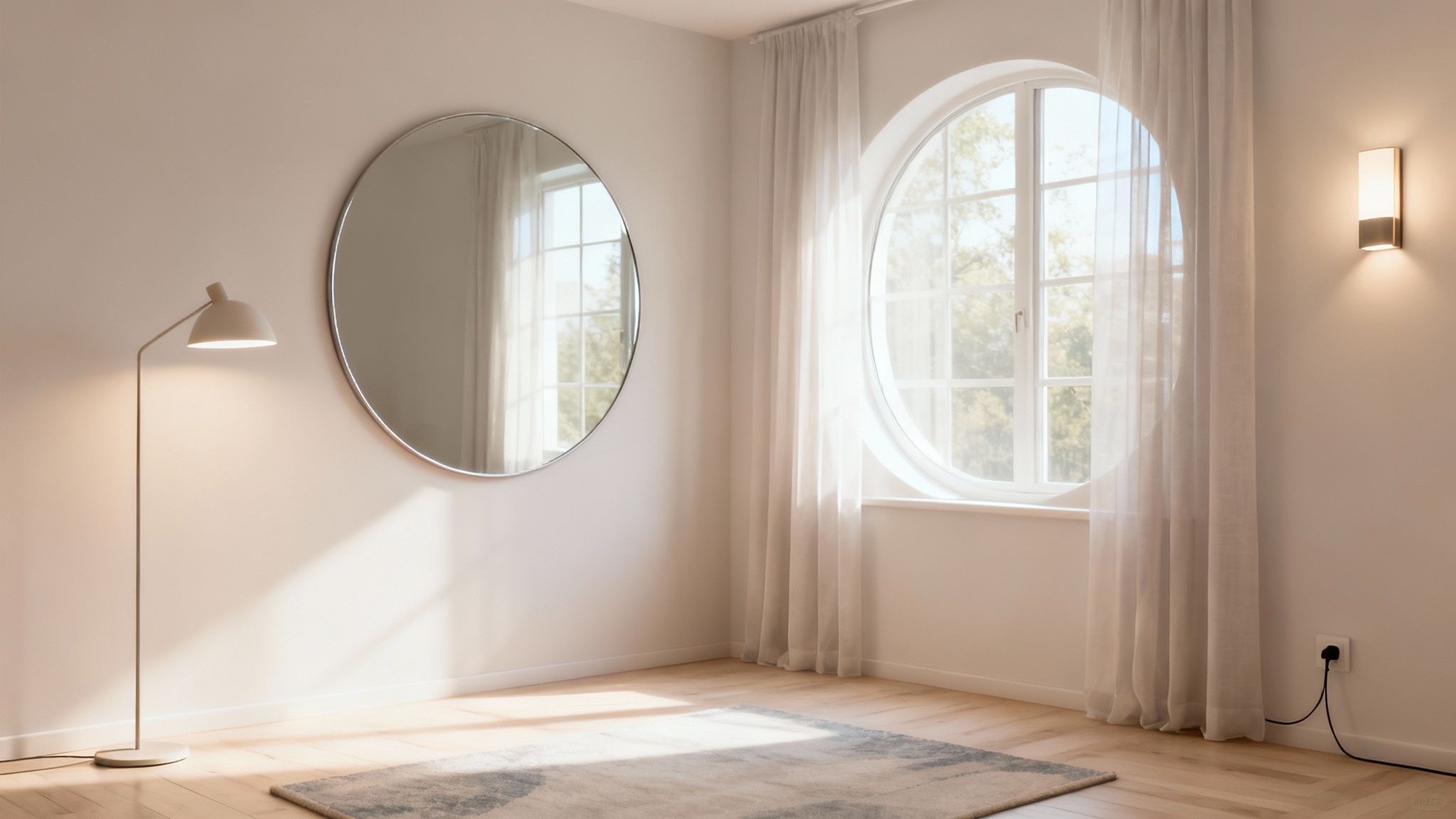
Forget the oversized, plush sectionals that eat up an entire room. Instead, think sleeker and smarter. A well-proportioned loveseat offers plenty of comfortable seating without hogging precious floor space. A modular sofa can be reconfigured as your needs change, and an elegant daybed can easily transition from a couch to a guest bed when friends stay over.
Think Vertically and Horizontally
The real trick is to select pieces that can adapt on the fly. I always look for items that either expand when needed or contain hidden functions, allowing you to get the most out of every square foot without creating a cluttered mess.
- Nesting Tables: These are a small-space classic for a reason. Stack them to save space for daily use, then pull them apart to serve drinks and snacks when you have company.
- Lift-Top Coffee Tables: A coffee table that rises to dining or desk height is an absolute game-changer. Suddenly, you have a surface for work or meals without needing a separate, bulky table.
- Storage Ottomans: These might be the ultimate multi-functional piece. They offer a place to put your feet up, extra seating for friends, and a hidden spot to stash blankets, games, or magazines.
A simple C-table, for instance, is an incredibly versatile and affordable addition. It can slide over your sofa arm to hold a laptop or a drink, then just as easily serve as a minimalist nightstand beside your bed. That single, small-footprint item just replaced two bulkier pieces of furniture.
Embrace Smart, Minimalist Design
Another brilliant solution I love is the wall-mounted drop-leaf table. It can be a dining spot for two or a compact workspace, but when you’re done, it folds flat against the wall, instantly giving you back your floor space. This kind of thinking is central to minimalist design, which prioritizes function and clean lines above all else.
Choosing multi-functional furniture is less about finding a single 'perfect' item and more about building a flexible system where each piece works in harmony with the others to serve multiple needs.
The demand for these types of clever, space-efficient solutions is growing fast. The global minimalist furniture market was valued at USD 49.66 billion in 2023 and is projected to hit USD 81.1 billion by 2030. This trend, detailed in reports like this one from Grand View Research, is fueled by more of us living in smaller urban spaces, making smart, budget-friendly furniture more relevant than ever.
A perfect example of blending style with hidden utility is a modern coffee table with concealed storage. A piece like this smart storage coffee table with hidden compartments can keep your living area tidy while maintaining a sleek, uncluttered look. This is the kind of strategic choice that elevates both the form and function of your home, proving you don’t need a big space or a big budget to live beautifully.
Using Light and Color to Create Space
When you're working with a small space on a tight budget, your most powerful tools aren't furniture or decor—they're light and color. Get these two elements right, and you can visually expand your room, making it feel brighter, more open, and way larger than its actual square footage.
A fresh coat of paint is your first and most affordable move. There's a reason light, neutral colors are famous for their space-enhancing magic: they reflect light instead of absorbing it. But don't just default to basic white. Consider soft grays, warm beiges, or even a pale pastel to create an airy, intentional backdrop.
Just be sure to pay attention to the paint's undertones. A cool-toned gray can make a north-facing room feel a bit chilly, while a warm-toned white can bring a cozy glow to a room that doesn't get much sun.
Harness the Power of Reflection
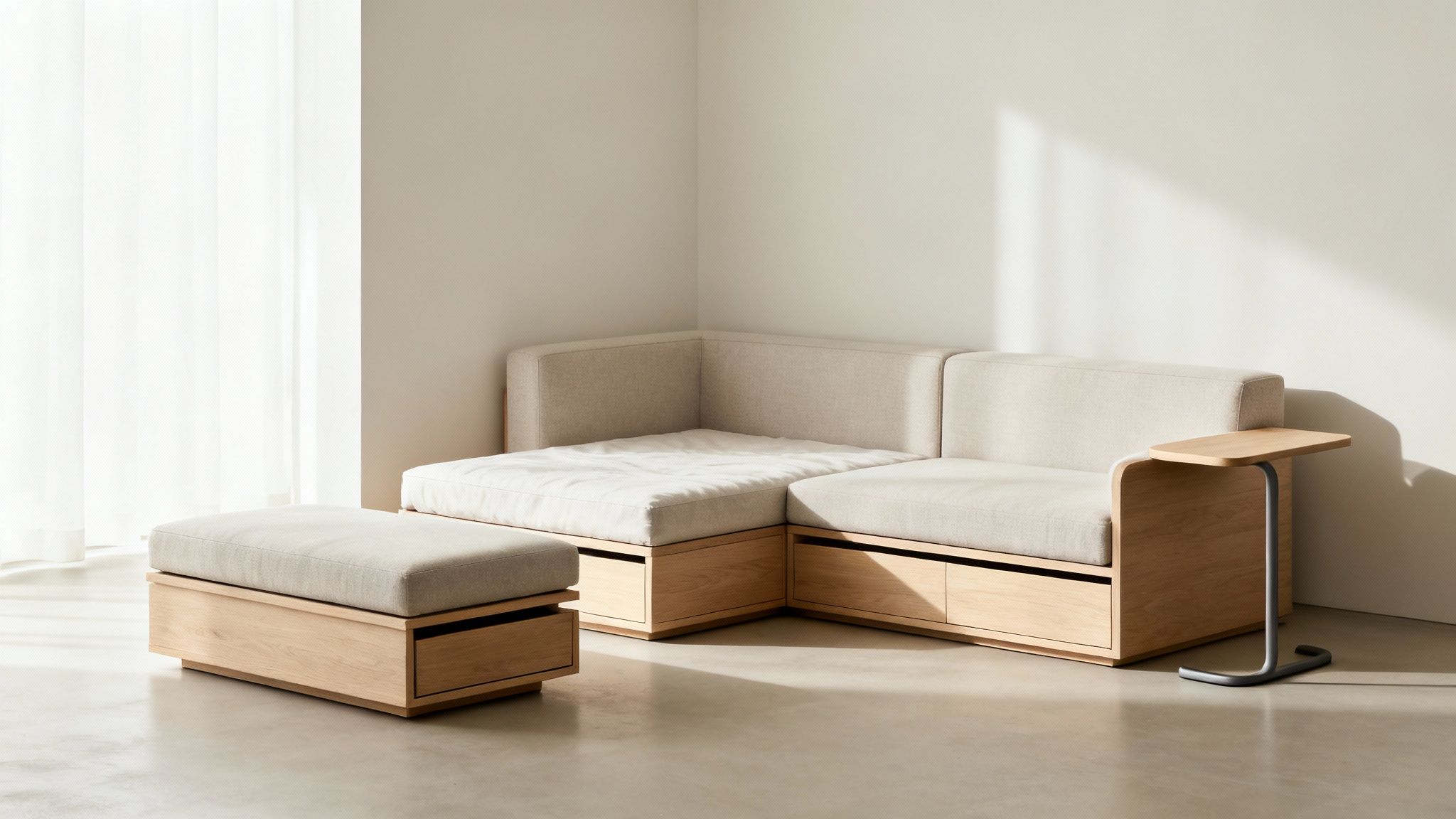
Once your walls are a light and inviting canvas, it's time to amplify that brightness. Mirrors are a classic, budget-friendly trick for a reason: they just work. Placing a large mirror directly opposite a window literally doubles the amount of natural light pouring in and creates a powerful illusion of depth.
My advice? Don't just hang a small mirror as an afterthought. Go for the largest one your budget and wall space can handle. You can often find massive, inexpensive mirrors at thrift stores or flea markets. A quick coat of spray paint on a dated frame is an easy way to make it look modern and chic. This one addition can instantly make a room feel less confined.
A common mistake I see is using too many small decor pieces, which just creates visual clutter. In a tiny room, a single, large mirror is far more effective at creating a sense of openness than a gallery wall of smaller frames.
Layer Your Lighting Strategically
Great lighting is so much more than a single fixture screwed into the ceiling. A truly well-lit room feels balanced and functional because it relies on multiple layers of light. To create a dynamic and inviting atmosphere, you'll want to include three different types.
- Ambient Lighting: This is your room's overall illumination, usually coming from a ceiling fixture or a powerful floor lamp.
- Task Lighting: This is focused light for specific activities, like a reading lamp next to your favorite chair or some under-cabinet lighting in the kitchen.
- Accent Lighting: This adds dimension and highlights specific features, like a small lamp on a bookshelf or a spotlight on a piece of art.
For affordable and space-saving solutions, I love plug-in wall sconces—they free up precious table space. Peel-and-stick LED strips are perfect for adding task lighting under kitchen cabinets or shelves without calling an electrician.
A stylish, portable lamp, like the TouchGlow LED Lamp, is another great move. It can serve as both task and accent lighting, and you can move it wherever you need it most. By layering these different sources, you get rid of dark corners and make the entire space feel bigger and more thoughtfully designed.
Finding Smart Storage in Unexpected Places
Nothing shrinks a room faster than clutter. It's the ultimate enemy of small-space living, turning even the most thoughtfully decorated corners into chaotic, cramped zones. But here's the secret: winning this battle isn't about buying a mountain of plastic bins. It's about learning to see the hidden storage potential all around you.
The first step is to shift your perspective. Stop looking at your floor plan and start looking up. Your vertical space is your greatest untapped asset—prime real estate that doesn't eat into your precious footprint.
Go Vertical to Maximize Your Square Footage
When you stop thinking at eye level, a whole new world of storage opens up. Getting things off the floor does more than just clear a path; it draws the eye upward, making the entire room feel taller and more expansive. It’s a classic designer trick that works every time.
Here are a few of my favorite ways to do it:
- Floating Shelves: These are a minimalist’s best friend. Use them for books, curated decor, or even a tiny coffee bar. A stack of three can easily replace a bulky bookcase.
- Slender Bookcases: Look for tall, skinny "ladder" or "spine" style bookcases. They offer a ton of storage while taking up barely any floor space, making them perfect for tucking into an awkward corner.
- Versatile Pegboards: Don't just relegate these to the garage! A large pegboard can be a surprisingly chic and flexible storage system in a home office or entryway. You can customize it with shelves, hooks, and baskets for everything from keys and mail to small plants.
By going vertical, you give everything a designated home, which is the key to maintaining a calm, organized space. This idea is so fundamental, we explore even more ways to do it in our guide to stylish storage ideas for modern home organization.
Uncover Hidden Real Estate
Once you’ve conquered the walls, it’s time to seek out all those overlooked nooks and crannies. These forgotten zones are perfect for stashing things you don't need every single day. The goal is to make every inch count.
The most successful small spaces aren't about having less stuff; they're about having a smarter, designated place for everything. By claiming unused areas, you create a sense of order that makes a room feel instantly larger.
Keep an eye out for these often-neglected spots:
- Under the Bed: This is a goldmine. Low-profile rolling bins or vacuum-sealed bags are perfect for stashing out-of-season clothes, extra bedding, and shoes.
- Behind Doors: The back of a closet or bedroom door is the perfect spot for an over-the-door organizer. Use it for toiletries, cleaning supplies, scarves, or hats.
- Awkward Corners: That dead space doesn't have to go to waste. A slim corner shelving unit or even a tall plant stand can turn it into a functional and decorative feature.
Finally, give your existing closets and cabinets a quick audit. Simple, inexpensive tools like shelf risers can instantly double your storage for plates or canned goods. Drawer dividers are a lifesaver for taming utensil chaos or creating order in your sock drawer.
By combining these vertical strategies with a hunt for hidden spots, you’ll build a highly functional home that feels spacious and serene—proving you don't need a big budget for brilliant organization.
Adding Personality with DIY and Thrifty Finds
This is where your unique style really comes to life. Decorating a small space on a tight budget isn't about what you can't have—it's a golden opportunity to get creative and make a home that feels like you. Embracing a little DIY and the art of thrifting lets you fill your home with character and stories, not just stuff.
The best part of this approach is that you end up with one-of-a-kind pieces that nobody else has. With a bit of vision, forgotten items become personal treasures, making your small space feel thoughtfully curated and deeply personal.
The Thrill of the Hunt
Secondhand shopping is a total adventure. Digging through thrift stores, flea markets, and online spots like Facebook Marketplace can unearth unique finds with history and charm—usually for a fraction of what you'd pay for new decor.
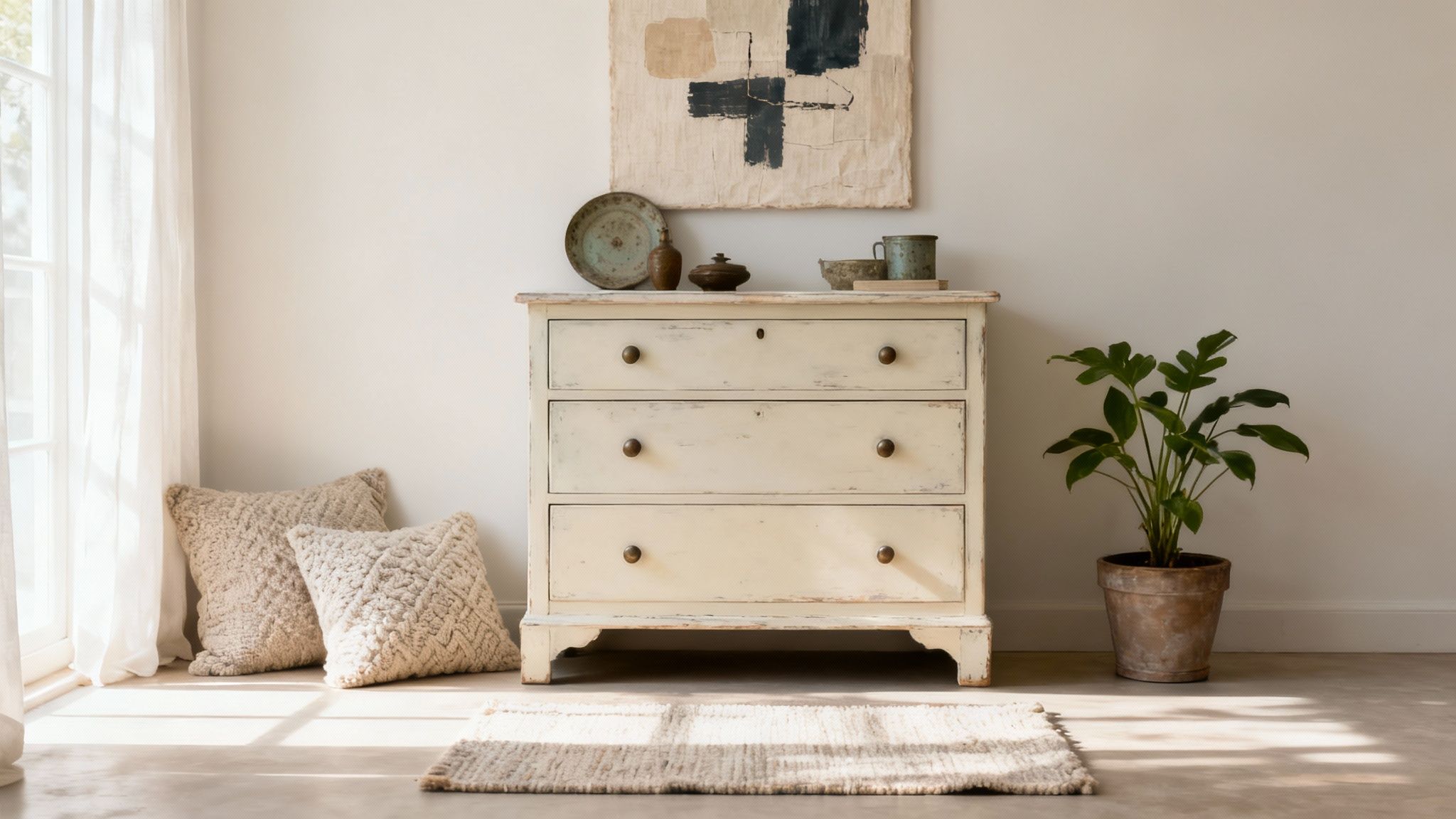
When you're searching, try to keep an open mind. That dated wooden dresser might not look like much at first, but with a fresh coat of chalk paint and some new hardware, it can become a modern statement piece. Always look for items with good "bones"—solid construction and an interesting shape—instead of getting hung up on the current finish.
Don't overlook the small stuff. A vintage vase, a unique picture frame, or a stack of old books can be grouped together to create a beautiful little scene on a floating shelf or coffee table, adding instant personality.
This interest in unique, affordable decor isn't just a niche hobby; it's massive. The global home decor market is projected to reach $1.1 billion by 2032, showing just how much people want stylish yet accessible design. This trend is exactly what fuels the market for budget-friendly options, making thrifting and DIY more relevant than ever. You can dig into more insights on the global home decor market over at Statista.com.
High-Impact DIY Decor Projects
You don't need to be a master crafter to make stunning decor. Honestly, some of the most effective projects are surprisingly simple and won't break the bank. These are perfect for decorating small spaces on a budget.
- Create Your Own Abstract Art: All you need is a blank canvas (which you can often find cheap at thrift stores), a few sample pots of paint in your color palette, and a scraper or a wide brush. In just an afternoon, you can create a professional-looking piece of abstract art that perfectly matches your room's vibe.
- Upcycle Glass Jars and Vases: Clean out old pasta sauce jars or grab a few interesting glass vases from a thrift shop. A quick coat of spray paint—a stone-effect or matte black is very chic right now—can turn them into a cohesive set of stylish containers for utensils, makeup brushes, or small plants.
- Add Life with Houseplants: Plants are living decor. They add color, texture, and a literal breath of fresh air to any room. You can propagate cuttings from friends' plants for free or look for affordable options at local nurseries and even grocery stores. Grouping a few small plants of varying heights creates a lush, dynamic look without taking up much space.
Ultimately, adding these personal touches is what transforms a small apartment into a real home. When you combine clever thrifty finds with a bit of DIY magic, you create a space that not only looks great but also tells your unique story.
Your Small Space Decorating Questions Answered
Even with the best plan, decorating a small space on a budget can feel like solving a puzzle. Let's tackle some of the most common questions that pop up, so you can move forward with confidence and sidestep those classic decorating pitfalls.
Getting these decisions right is what turns a small room into a home that feels both stylish and perfectly functional, no matter its size.
What Is the Biggest Mistake to Avoid?
The single most common misstep is choosing furniture that’s way too big for the room. A massive sofa or a bulky dining set can instantly swallow a space, making it feel cramped and difficult to navigate. All your hard work, gone.
Always, always measure your room and any potential furniture before you buy. Look for pieces with a smaller footprint, exposed legs to create a sense of openness, and a lower profile. It’s so much better to have a few perfectly scaled pieces than one oversized item that completely dominates the room.
How Can I Make My Small Apartment Look Expensive?
To get that high-end look without the high-end price tag, zoom in on three key areas: lighting, textiles, and hardware. These small details pack a huge visual punch and give your space a custom, polished feel.
- Upgrade Your Lighting: Ditch the basic, builder-grade light fixtures. Swapping them for a stylish drum shade or a modern pendant light can completely transform a room’s atmosphere.
- Layer in Rich Textiles: Invest in quality textures. Just a couple of velvet pillow covers, a chunky knit throw, or a plush rug adds an instant layer of luxury and comfort.
- Change Out the Hardware: This is my favorite quick win. Replace the standard knobs and pulls on cabinets and dressers with unique, more substantial hardware. It’s a fast, affordable change that makes furniture look ten times more expensive.
By focusing on these impactful details, you create a layered, thoughtfully designed look that feels luxurious without the hefty price tag. It proves that great style is about curation, not cost.
What's the Best Way to Add Personality Without Clutter?
The secret is to be intentional. Instead of scattering lots of small trinkets around—which just looks messy—learn to create curated "vignettes."
Group a few objects of varying heights and textures on a decorative tray or a floating shelf. This simple trick contains the items and turns them into a single, cohesive focal point. Another fantastic strategy is to use your walls. A single, large piece of art or a well-arranged gallery wall injects a huge amount of personality without taking up any precious floor space.
Finally, let your functional items pull double duty as decor. A beautiful stack of books on a side table, a stylish teapot left out on the stove, or a collection of your favorite mugs displayed on open shelving all add character while still serving a purpose.
Ready to put these ideas into action? Explore the curated collections at AbodeArc to find the perfect lighting, textiles, and smart storage solutions that will transform your small space. Start shopping now at https://www.abodearc.store and create the home you love.
Article created using Outrank