
How to decorate home on a budget: chic ideas that work
Decorating your entire home on a budget isn't about sacrifice—it's about being smart and intentional. The secret isn't finding the cheapest version of everything; it's about having a solid game plan before you even think about shopping. You need to define your style, prioritize rooms, and set a budget. This simple prep work is the difference between a pieced-together house and a cohesive, beautiful home you truly love.
Create a Plan for Budget-Friendly Decorating
Jumping into decorating without a plan is a recipe for disaster. It’s like going to the grocery store starving—you’ll grab a bunch of things that look good in the moment but don't add up to a real meal, and the bill will be shocking. A thoughtful strategy is your most powerful tool, and it’s completely free. It turns a chaotic process into a curated, intentional project.
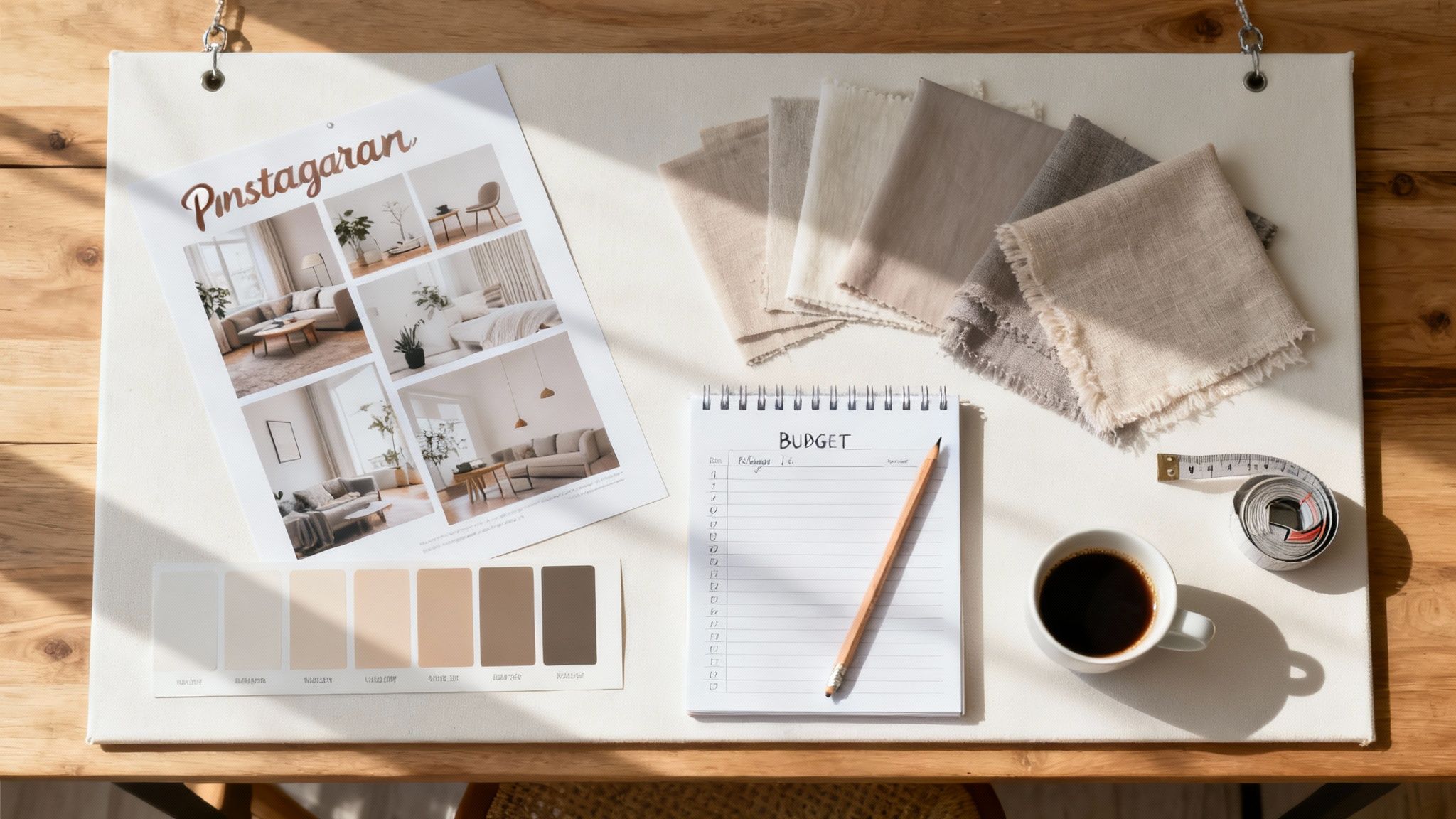
Think of this planning phase as empowerment, not restriction. It gives you a clear roadmap, helping you focus your time and money where they’ll make the biggest impact.
Define Your Personal Style
Before you can create a space you love, you have to know what you actually love. Don't just settle on a generic label like "modern" or "boho." It’s time to get specific. The best way to do this is with a visual guide, and free tools like Pinterest are perfect for the job. Start a new board and just start pinning images that catch your eye.
Once you’ve saved 20-30 images, step back and look for the patterns. Are you consistently drawn to:
- Specific colors? Maybe it's a palette of earthy neutrals, or perhaps you keep pinning rooms with bold jewel tones.
- Certain textures? Look for recurring materials like linen, velvet, natural wood, or sleek metal.
- A particular mood? Is the vibe you're saving cozy and layered, or is it minimalist and serene?
This simple exercise helps you build a "style vocabulary" that will guide every purchase, preventing you from bringing home trendy items that just don't fit.
Prioritize Your Rooms and Projects
Here’s a reality check: you don’t have to decorate your entire home at once. Trying to do it all is the fastest way to burn out and blow your budget. Instead, think strategically and rank your spaces by use and impact.
Which room's transformation would make the biggest difference in your daily life? Is it the living room where your family gathers every night? Or maybe it's your bedroom—your personal sanctuary to start and end each day. Tackling one high-impact area first gives you a huge sense of accomplishment and a finished space you can enjoy while you plan the next phase.
A beautifully decorated home is rarely completed overnight. The most personal and inviting spaces are often curated slowly, with thoughtful pieces added over time. Embrace the journey, not just the destination.
Establish a Realistic Budget
Okay, it’s time to talk numbers. Be honest with yourself about what you can comfortably spend. This isn’t about plucking a random figure out of thin air; it’s about looking at your actual finances and deciding on an amount that feels feasible without adding stress.
Once you have your total number, break it down. If you’ve decided to tackle the living room first with a $500 budget, you can then allocate those funds to specific needs, like a new rug, throw pillows, or paint. This micro-budgeting keeps you on track and forces you to get creative.
The global home decor market is booming, and it’s expected to reach approximately USD 1,047.9 million by 2032. That just shows how much people value personalizing their spaces, no matter the price point. You can learn more about the trends in the home decor market and see how you fit in.
To help you get started, here's a quick-reference guide to allocate your budget and prioritize your decorating efforts based on room function and impact.
Budgeting and Prioritization Framework
| Room or Area | Priority Level | Estimated Budget Allocation | Quick Win Ideas |
|---|---|---|---|
| Living Room | High | 25-35% | New pillows, a statement rug, fresh paint |
| Primary Bedroom | High | 20-30% | Quality bedding, blackout curtains, dimmable lighting |
| Kitchen | Medium | 15-20% | Updated hardware, new faucet, stylish runner |
| Dining Area | Medium | 10-15% | Centerpiece, new light fixture, placemats |
| Guest Room / Office | Low | 5-10% | A comfortable chair, good task lighting, wall art |
| Entryway / Hallways | Low | 5% | Mirror, console table, welcome mat |
This framework is just a starting point. Feel free to adjust the percentages based on what matters most to you and your family’s lifestyle. The goal is to make a plan that works for your home and your wallet.
Find Unique Decor Through Thrifting and Upcycling
Let's be honest: thrifting is more than just a way to save a few bucks. It's a treasure hunt for those one-of-a-kind pieces that give a home true personality. When you're trying to decorate a whole home on a budget, secondhand stores, flea markets, and online marketplaces are your secret weapon. This is how you find items with character—the kind you won’t see in every big-box store catalog.
This is how you build a space that feels curated and collected over time, not just purchased in a single weekend.
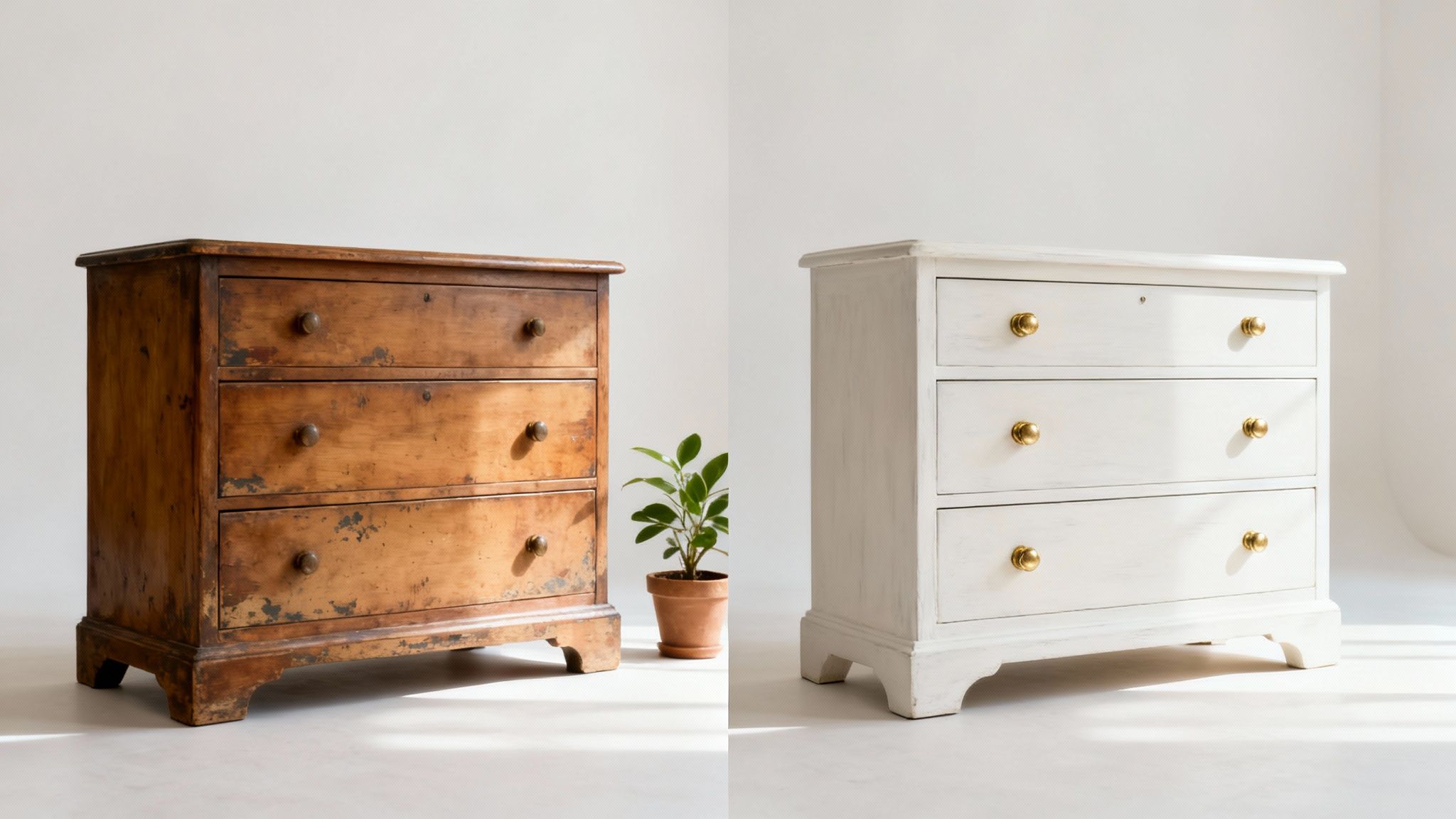
The real trick is learning to look past an item's current state and see its potential. That dated, orange-toned oak dresser? A chair with some truly questionable floral fabric? They might be just a few simple steps away from becoming your new favorite piece. It all starts with knowing what you're looking for.
The Strategic Thrifting Checklist
Walking into a thrift store without a plan can feel chaotic. To keep your search focused and productive, keep your eyes peeled for pieces with "good bones." This just means they're well-made, sturdy, and have a classic shape that can be easily updated with a little TLC.
Here’s what should always be on your thrifting radar:
- Solid Wood Furniture: Look for dressers, side tables, and bookshelves made from real wood, not particleboard. A great sign of quality craftsmanship is seeing dovetail joints on the drawers. These are the perfect candidates for a quick sand and a fresh coat of paint.
- Unique Frames and Mirrors: Don't worry about the art inside—focus on the frame itself. A super ornate, gilded frame can be spray-painted a modern matte black for a dramatic effect. Even a simple wooden frame can get new life with a mirror or a new print.
- Quality Textiles: Search for curtains, tablecloths, or even blankets made from 100% cotton or linen. These natural fabrics can be dyed, hemmed, or repurposed into custom throw pillow covers that look incredibly high-end.
- Classic Lamp Bases: A lamp with a great silhouette can be completely transformed. A quick coat of spray paint and an inexpensive, modern lampshade are all it takes. Just ignore the dingy old shade and focus on the base's shape.
This targeted approach helps you filter out the junk and zero in on the items that offer the most bang for your buck.
Transform Your Finds with Simple Upcycling
Upcycling is where the real magic happens. With a little bit of effort, you can turn a secondhand find into a custom piece that fits your style perfectly. You don’t need to be a master woodworker, either. Many of the most impactful projects are surprisingly simple.
Thrifting lets you experiment with your style without a major financial commitment. If a DIY project doesn't turn out perfectly, you've only invested a small amount of money and learned a valuable lesson for next time.
A fresh coat of paint is one of the easiest and most effective ways to upcycle furniture. Imagine finding a sturdy, solid wood dresser for $30. With a bit of prep work and paint, it can easily look like a piece from a high-end boutique that would have cost hundreds.
Mini-Guide to Painting Furniture
- Clean Thoroughly: Start by giving the piece a good scrub with a degreasing cleaner to remove any dirt, grime, or oils that have built up over the years.
- Scuff Sand: Lightly sand the entire surface with medium-grit sandpaper (around 120-150 grit). You’re not trying to remove the old finish, just roughing it up so the new primer can grip properly.
- Prime Everything: Apply one or two thin coats of a quality primer. This is a non-negotiable step! It prevents old stains from bleeding through and ensures your paint job will last.
- Paint with Light Coats: Apply two to three thin coats of your chosen paint, letting each one dry completely in between. Using a small foam roller on flat surfaces will help you get a smooth, factory-like finish without any brush strokes.
- Seal for Durability: Finish with two coats of a water-based polyurethane or polycrylic in a satin or matte finish. This protects your hard work from chips and scratches, especially on high-traffic pieces like coffee tables or dressers.
This simple process proves that you don't need a massive budget to decorate your home on a budget; you just need a bit of vision and a willingness to put in some elbow grease. The result is a one-of-a-kind item filled with character and your own personal touch.
Shop Smart for New Home Decor
While thrifting and DIY are your best friends on a budget, some things just have to be new. This is where smart shopping becomes your superpower. Knowing when and where to buy can save you hundreds, letting you bring home quality pieces without emptying your wallet.
The goal is to shift from impulse buys to strategic purchases. Instead of grabbing something just because it’s on sale, you learn to wait for the right sale on the right item. This simple change ensures every dollar spent is a solid investment in your home.
Understand the Retail Cycle
Retailers run on a predictable calendar, and tapping into it can unlock massive savings. Big-ticket items like furniture and mattresses almost always hit deep discounts during holiday weekends. Mark your calendar for President's Day, Memorial Day, and Labor Day—these are the best times to snag that sofa or dining table you’ve been eyeing.
Other categories have their own sweet spots, too:
- Linens and Bedding: January is famous for "white sales," offering the year's best deals on sheets, towels, and comforters.
- Outdoor Furniture: Shop for patio sets at the end of summer, usually around August and September, when stores are clearing out inventory.
- Rugs and Flooring: Look for sales in spring and fall, as retailers target homeowners refreshing their spaces for the new season.
A little patience can literally get you brand-new items for secondhand prices. This is a core tactic to decorate home on a budget without compromising on quality.
Navigate Affordable Retail Hotspots
You don’t need a high-end budget to find stylish pieces. Stores like Target, HomeGoods, IKEA, and even Amazon have become treasure troves for affordable decor. The trick is to shop with a discerning eye. Look for pieces with a timeless quality or those that can be easily customized, rather than just grabbing the first trendy thing you see.
Pro tip: always check the "as-is" or clearance section first. You can often find floor models or items with tiny, fixable flaws for a fraction of the price. IKEA’s as-is section is legendary for a reason. You can explore a wide range of modern home decor options that give you that high-end look without the matching price tag.
One of the biggest decorating mistakes is buying a full matching set from one store. Mix it up! Pair a budget-friendly sofa with a unique thrifted coffee table. The result is a far more curated, personal, and expensive-looking space.
This blend of quality and affordability is a huge driver in the home decor market. The industry is projected to grow from USD 141.27 billion in 2024 to approximately USD 203.16 billion by 2033. Retail stores still capture a massive 41.7% of this revenue because shoppers want to see and touch items before buying—a must when you're spending carefully. To get a better sense of market dynamics, you can discover more insights about the growth of the home decor industry.
Use Technology to Your Advantage
In today's world, there’s almost no reason to pay full price if you’re willing to do a little digital legwork. Before you click "buy," use these tools to make sure you're getting the absolute best deal.
Here are a few tactics to add to your shopping arsenal:
- Set Deal Alerts: Use platforms like Google Shopping or Honey to set alerts for specific items. You'll get an email the moment the price drops.
- Compare Prices: Never assume the first price you see is the best. A quick search might show another retailer offering the same item for less.
- Read Reviews Religiously: Look for reviews that include real customer photos. They give you a much better sense of an item's true color, scale, and quality than polished product shots ever could.
- Check Return Policies: This is crucial. A great deal isn't so great if you're stuck with something that doesn’t work in your space. Make sure you can return it easily and without hefty fees.
By combining these strategies—timing your purchases, knowing where to look, and using tech—you can confidently buy new pieces that fit both your style and your budget.
Master High-Impact, Low-Cost Decorating Techniques
Some of the most powerful decorating moves have nothing to do with a huge budget. It’s all about clever techniques. These are the secrets designers use that lean on creativity and effort, not a high credit limit. By zeroing in on paint, textiles, and smart styling, you can completely redefine a room for a surprisingly small investment.
These are the strategies that create a professionally styled look, proving you can decorate home on a budget and still get stunning results. It’s about working smarter, not spending more.
Harness the Power of Paint
Never, ever underestimate what a can of paint can do. It's the most cost-effective tool in your decorating arsenal, hands down. For less than the cost of dinner out, you can dramatically change the entire mood and feel of a space.
But don't just stop at painting four walls the same color. Think bigger with these high-impact projects:
- Create an Accent Wall: A single wall painted in a bold, contrasting color acts as an instant focal point. It’s a classic designer trick that adds drama and depth without overwhelming the room.
- Paint Interior Doors: Give an overlooked feature a dose of personality. A door painted black, charcoal gray, or even a soft pastel adds a custom, high-end feel for almost no cost.
- Stencil a Dated Floor: Stuck with an old linoleum or tile floor? A durable floor paint and a modern stencil can mimic the look of expensive custom tile for a tiny fraction of the price.
Layer Textiles for Coziness and Color
A room without textiles feels cold and unfinished. Simple as that. Layering different fabrics is how you introduce essential elements like color, pattern, and texture, making a space feel inviting and lived-in.
Start with the largest surfaces. Well-placed curtains hung high and wide can make windows look bigger and ceilings taller. An area rug is perfect for defining a seating area and grounding your furniture.
From there, add smaller, more accessible layers. Throw pillows and blankets are perfect for injecting trendy colors or patterns without a major commitment. You can easily swap them out seasonally to keep the room feeling fresh. Don't be afraid to mix textures—a velvet pillow next to a chunky knit throw adds visual interest and a touch of luxury.
A well-decorated room feels layered and collected over time. Textiles are your shortcut to achieving this look, instantly adding warmth and a sense of history to even the newest spaces.
Homeowners often look to redecorate every 3 to 5 years, and with trends driving interest in affordable projects, these techniques are more valuable than ever. In 2022, a 20% increase in median renovation spending pushed average costs to $18,000. Check out these home decor spending habits to see why smart, low-cost updates are key.
Style Surfaces Like a Pro
The final layer is all in the details—the artfully arranged shelves, coffee tables, and consoles. This is where your personality shines through. The key is to style with intention, not just fill empty space.
A classic designer guideline is the "rule of three," which suggests that items grouped in odd numbers are more appealing and dynamic to the eye. Instead of a symmetrical pair, try a trio of varying heights and shapes.
When styling a surface, follow these principles:
- Vary Heights: Place a tall vase next to a short candle and a stack of books. This variation keeps the eye moving.
- Mix Textures and Materials: Combine different elements like ceramic, metal, wood, and glass. A smooth vase, a metallic tray, and a woven basket create a rich, tactile display.
- Leave Breathing Room: Don't clutter every single inch. Negative space is just as important as the objects, allowing each piece to stand out. Managing your decor is one of many stylish storage ideas for modern home organization that can elevate your space.
By mastering these low-cost techniques, you move from simply filling a house to thoughtfully curating a home. It's about using what you have—and a few smart, affordable additions—to create a space that truly feels like you.
Your Room-by-Room Budget Decorating Blueprints
Alright, let's get down to business. Moving from big ideas to actual changes can feel like a huge leap, so we're going to break it down. Instead of trying to decorate the entire house at once (a recipe for burnout), let's focus our energy one room at a time. This makes the whole process feel much more manageable.
Every room has its own personality and its own opportunities for high-impact, low-cost updates. Think of this as your playbook for making smart, targeted changes right where they count.
The Living Room: An Inviting Focal Point
The living room is where life happens, so making it feel inviting pays off in a big way. The goal here is to create a clear focal point that anchors the room and gives your eyes a place to land. And no, you don't need a pricey statement piece to pull it off.
A thoughtfully styled media unit can do all the heavy lifting. Instead of letting it become a cluttered mess, use the "rule of three" to group decor items of varying heights. A small stack of interesting books, a sculptural vase, and a favorite framed photo is a classic combo. This simple, intentional arrangement makes the space feel instantly curated.
Another game-changer? Large-scale DIY art.
- Fabric Over Canvas: Grab a large, cheap canvas from a craft store and stretch a cool piece of remnant fabric over it. Instant graphic art.
- Framed Wallpaper: High-end wallpaper is expensive, but you can often order large samples for just a few dollars. Pop one into a simple, oversized frame for a surprisingly chic and abstract look.
- Paint Your Own: You don't have to be Picasso. A few coordinating paint colors, a big canvas, and some confident brushstrokes can create a unique piece that looks way more expensive than it is.
The Bedroom: A Serene Retreat
Your bedroom should be your sanctuary—a place to unplug and recharge. The secret to creating that serene vibe on a budget comes down to two things: textiles and lighting. Soft textures and warm, layered light are all you need to build a cozy atmosphere.
Start with a DIY headboard. A simple piece of plywood cut to size, wrapped in batting, and covered with a fabric you love can be mounted right on the wall behind your bed. It’s a single project that delivers a luxurious, hotel-like feel for a tiny fraction of the cost of a new bed frame.
Next, master the art of affordable luxury bedding. You don't need a sky-high thread count to make your bed look plush and inviting. The trick is all in the layering. Add a couple of oversized Euro shams against the headboard, toss on a few decorative pillows in different textures, and finish with a cozy throw blanket folded at the foot of the bed.
A well-styled bed is the centerpiece of any relaxing bedroom. It’s not about the price tag of the individual items, but how you combine them to create an inviting, multi-layered look.
Finally, fix the lighting. Swap out that harsh overhead light for a soft, diffused drum shade, or add a pair of inexpensive plug-in sconces on either side of the bed. Dimmable smart bulbs are another fantastic, low-cost upgrade that lets you set the mood with a tap.
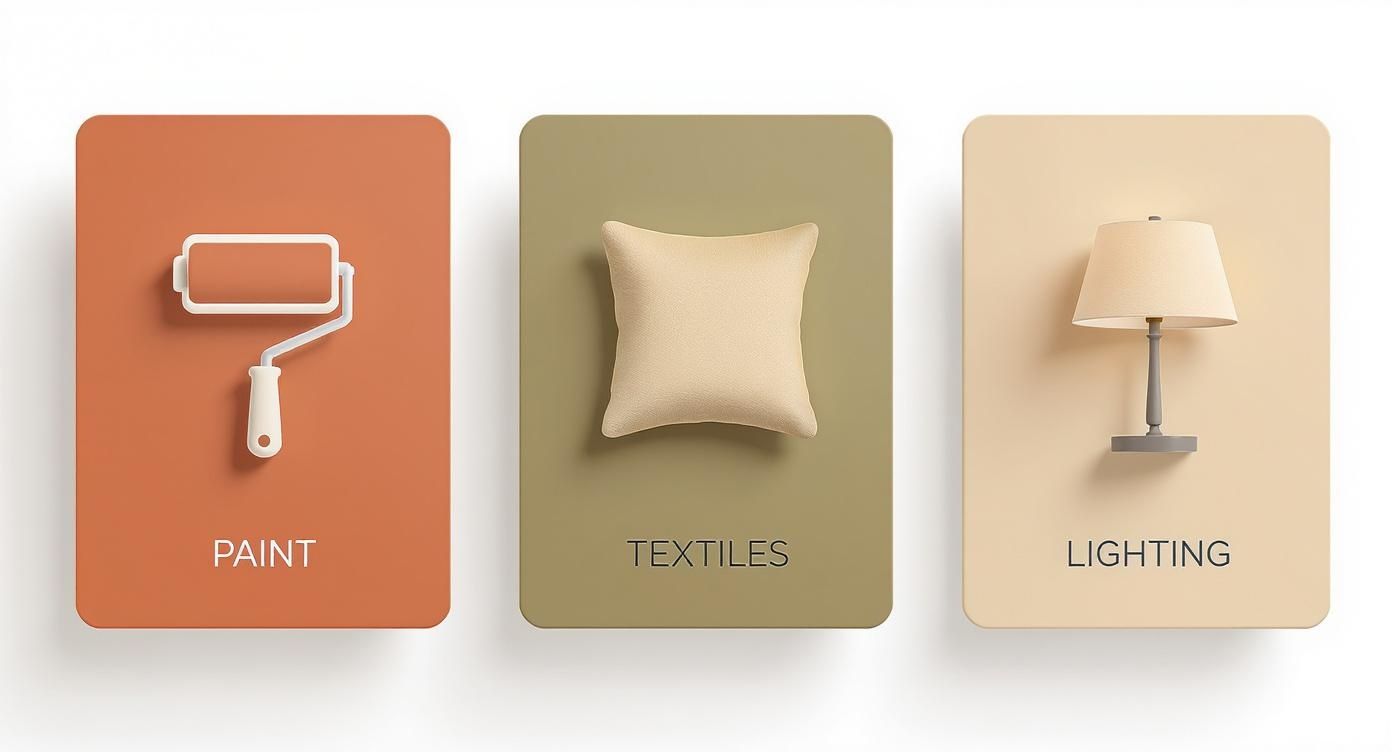
As you can see, paint, textiles, and lighting are the true trifecta of affordable decorating. They deliver the biggest transformation for the smallest investment, every single time.
The Kitchen: The Heart of the Home Refresh
A full kitchen gut job is one of the priciest projects you can take on, but you can make a massive difference with a few clever, low-cost updates. The focus here is on refreshing dated elements without touching the layout.
Painting your kitchen cabinets is the undisputed champion of high-impact projects. It’s definitely labor-intensive, but the material cost is minimal—just some paint, primer, and good prep supplies. A fresh coat of white can completely brighten a dark, tired kitchen, while a moody gray or deep green can add a dose of sophisticated drama.
If a full cabinet paint job feels like too much, start smaller. Swapping out old, dated hardware for modern knobs or pulls is a 15-minute task that instantly updates the whole room. You can also install a peel-and-stick backsplash to get the look of real tile without the cost, mess, or commitment.
And don't overlook the small stuff. A new runner adds color and softness underfoot, a stylish new faucet elevates the whole sink area, and simply decluttering your countertops makes the entire space feel bigger. These small upgrades extend beyond your four walls, too; you can learn how to create a cozy outdoor space with modern patio essentials for a complete home refresh. All these targeted projects add up to a big, beautiful transformation.
Budget Decorating Checklist by Room
To help you get started, here is a quick-glance table with actionable ideas and estimated costs for high-impact updates in key areas.
| Room | High-Impact Project Idea | Estimated Cost | Effort Level |
|---|---|---|---|
| Living Room | Create a DIY large-scale art piece | $30 - $75 | Low |
| Style a thrifted media console or bookcase | $50 - $150 | Low to Medium | |
| Add layered lighting (floor/table lamps) | $75 - $200 | Low | |
| Bedroom | Build a custom upholstered DIY headboard | $60 - $120 | Medium |
| Layer new bedding with thrifted pillows & throws | $100 - $250 | Low | |
| Install plug-in wall sconces for ambient light | $50 - $150 | Low | |
| Kitchen | Paint kitchen cabinets | $150 - $400 | High |
| Replace cabinet hardware (knobs/pulls) | $40 - $150 | Low | |
| Install a peel-and-stick backsplash | $80 - $200 | Medium | |
| Bathroom | Frame the existing mirror & update lighting | $50 - $120 | Low to Medium |
| Paint the vanity and replace the faucet | $75 - $200 | Medium | |
| Entryway | Add a runner and functional wall hooks | $60 - $150 | Low |
This checklist isn't exhaustive, but it's a great starting point for prioritizing projects that give you the most bang for your buck. Pick one that feels exciting and achievable, and dive in
Common Questions About Decorating on a Budget
Stepping into a home decorating project with a tight budget can feel like a mix of pure excitement and, let's be honest, a little bit of panic. It’s completely normal to have questions. Getting a handle on the practical stuff is the best way to build your confidence and make the whole process way less stressful.
We’ve rounded up some of the questions we hear all the time. These are the real-world concerns everyone runs into, and the answers should help clear the path forward.
What Is the First Thing I Should Do?
Before you even think about opening your wallet, the single most powerful thing you can do is declutter and deep clean. This step costs absolutely nothing but completely resets the canvas. You’ll see your space with fresh eyes and might even realize you don't need half the stuff you thought you did.
Once you’ve got that clean slate, it’s time to make the plan we talked about earlier. Get crystal clear on your style, decide which rooms or pieces get top priority, and set a budget you can actually stick to. Buying things without a vision is the fastest route to a mismatched home and a drained bank account.
Where Should I Splurge and Where Should I Save?
Ah, the classic budget dilemma. But the answer is simpler than you’d think. A good rule of thumb is to splurge on items that get the most use and have the biggest impact on your day-to-day comfort. These are your foundational, high-traffic pieces.
- Splurge On: Your sofa, your mattress, and maybe a really good area rug for the living room. These are the workhorses of your home—they anchor the space and need to be built to last.
- Save On: Decorative accessories are where you can have fun and be frugal. Think throw pillows, blankets, vases, art, and cute side tables. These are the perfect items to hunt for at thrift stores, DIY on a weekend, or find at budget-friendly shops.
How Can I Make My Home Look Expensive?
An expensive look is all about strategy, not price tags. A few clever tricks can seriously elevate your space and make it feel way more luxurious than it actually is.
First up, lighting. Swap out that boring, builder-grade ceiling fixture or just add a few floor and table lamps. Creating warm, layered light adds instant ambiance and sophistication. Second, go big with art. A single, large-scale piece—even one you make yourself—looks far more intentional than a bunch of small, scattered frames.
An edited space feels more luxurious than a cluttered one. Having fewer, well-chosen pieces that have room to breathe looks more curated and confident. It’s not about having more stuff; it’s about having the right stuff.
Finally, play with textiles. Hang your curtains high and wide to fake taller ceilings and bigger windows. Layering in pillows with interesting textures, like velvet or a chunky knit, also adds a touch of richness.
Should I Decorate One Room at a Time?
Absolutely. For most people, it is far more effective and satisfying to complete one room at a time. This approach gives you that amazing feeling of accomplishment and a finished, beautiful space to enjoy while you save up for the next project.
Trying to tackle a little bit everywhere at once often leaves your entire home feeling chaotic and unfinished for months on end. By focusing your energy and budget on one area, you'll see a much more cohesive and impactful result. Start with the room you use the most—like the living room or bedroom—to get the biggest bang for your buck right away.
Ready to find those perfect, affordable pieces to bring your vision to life? At AbodeArc, we curate a collection of modern, stylish decor that proves you don't need a huge budget to create a beautiful home. Discover everything from chic decorative accents to smart storage solutions and get free shipping on orders over $49. Start building your dream space today at https://www.abodearc.store.
Article created using Outrank